
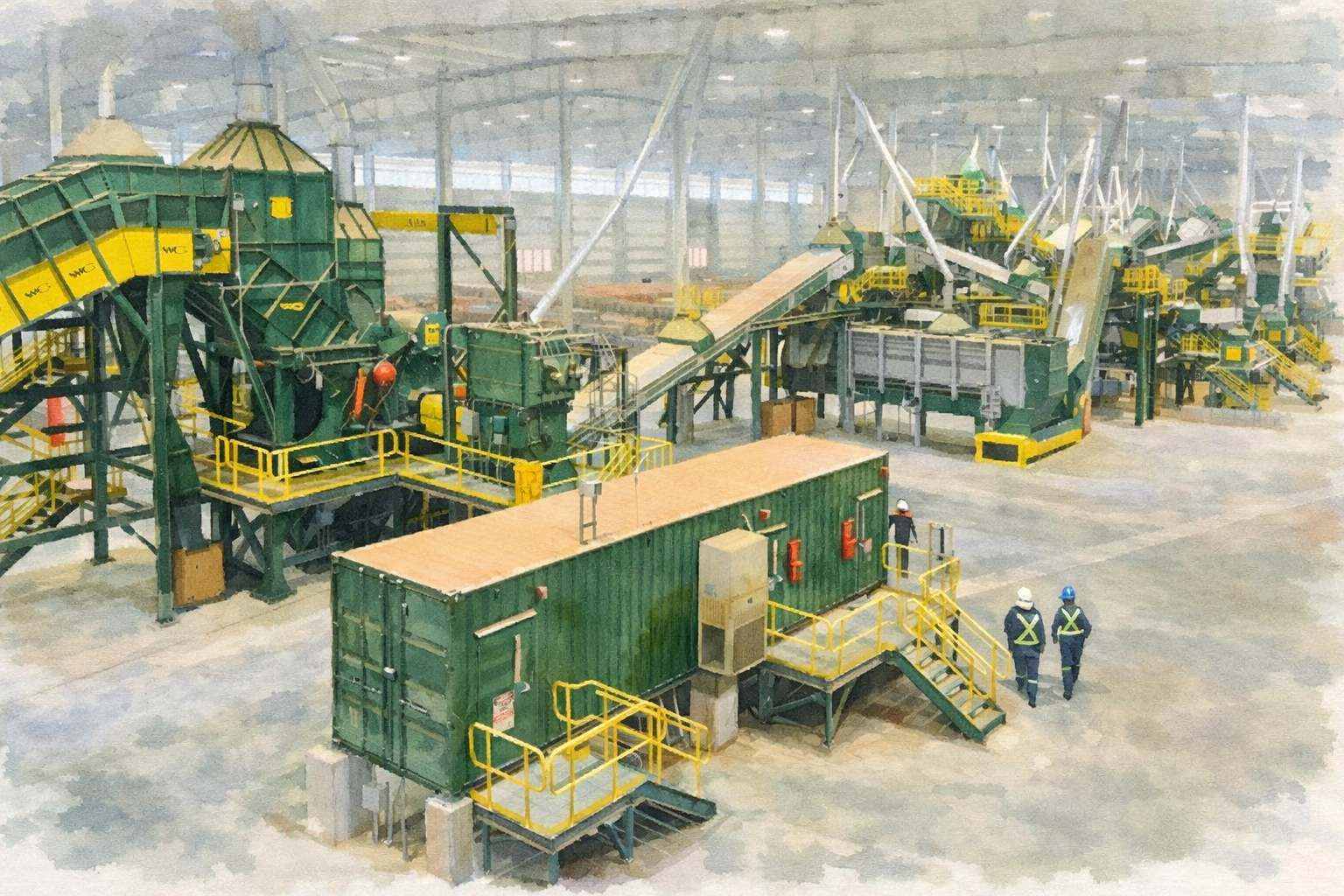
Waste & Materials
Our 20th-century materials system is colliding with 21st-century constraints. As compute, re-shoring, and geopolitics reshape demand, critical inputs have become more scarce, volatile, and strategically limited.

Building the Industrial Materials System for the AI Era
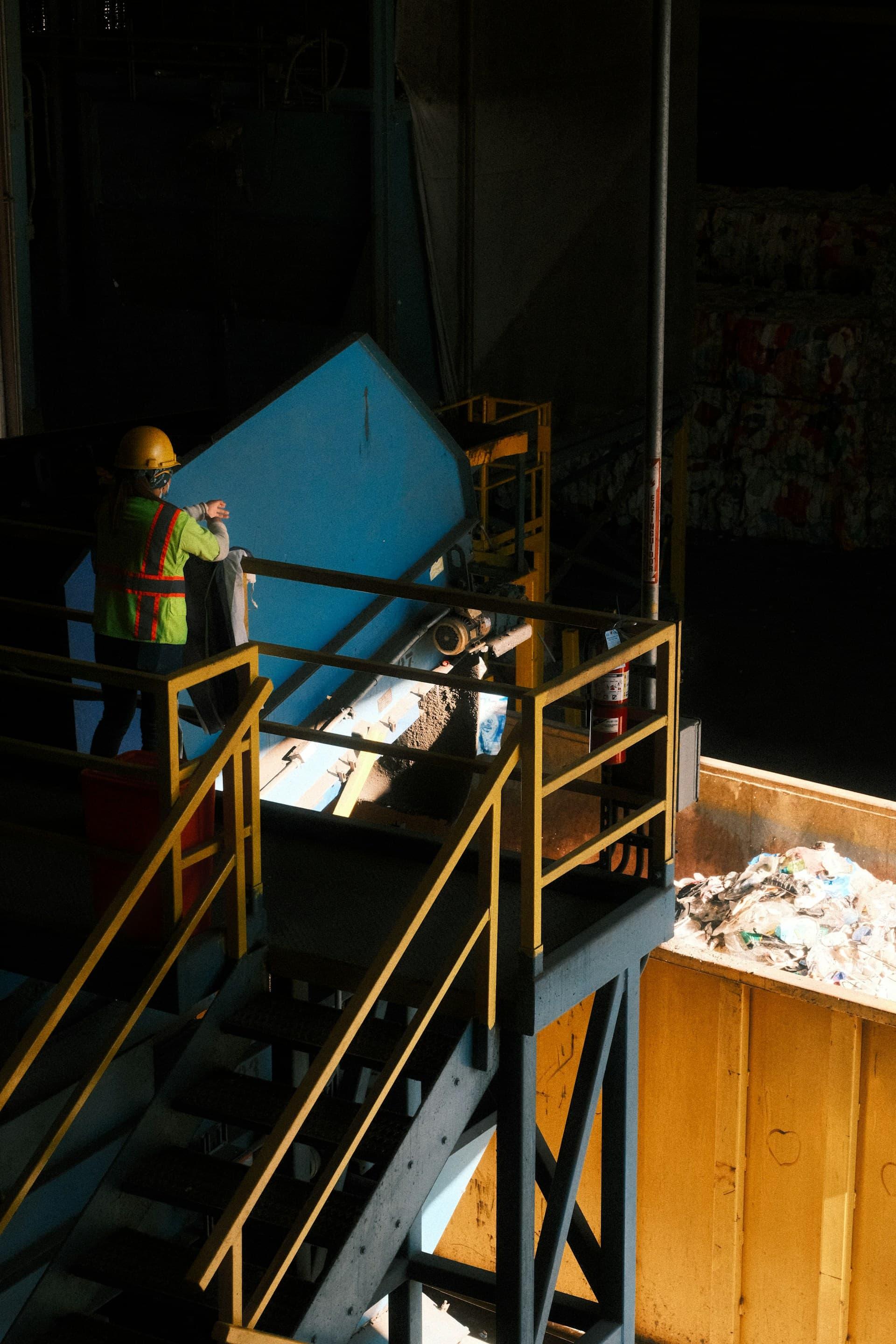
Overlay's Waste & Materials strategy builds the materials system for the AI era by investing in automated sortation, advanced processing infrastructure, and offtake-backed assets that transform waste, scrap, and end-of-life assets into secure feedstock for data centers and advanced manufacturing.
Policy as a Tailwind
U.S. policy now treats materials recovery, AI-enabled supply creation, and domestic inputs as national priorities. DOE's Genesis Mission highlights AI-driven innovation across energy and materials, while bipartisan alignment reinforces supply chain security across energy, manufacturing, and critical infrastructure.
Recent actions demonstrate tangible support:
- A $12B strategic critical minerals reserve to reduce supply risk
- Direct federal debt and equity investment in domestic mining and magnet capacity
- Coordinated efforts with allies to secure and diversify critical-minerals trade
Rapid innovation in infrastructure and domestic supply chains has become strategically necessary. Policy is functioning as a structural tailwind, de-risking investment and accelerating commercialization across materials and energy systems.
Manufacturing as a Demand Driver
Advanced manufacturing is now increasingly limited by input availability more than labor or capital. Manufacturers are beginning to prioritize:
- Domestic & regional sourcing
- Consistent quality & specification
- Reduced exposure to geopolitical & logistics risk
Recovered and upgraded materials are becoming the preferred inputs as cost competitiveness, reliability, and policy alignment converge. This shift is most acute across metals, advanced material inputs, and industrial feedstocks where global supply chains have previously been optimized for cost, not reliability.
Innovation as the Unlock
Material recovery hasn't been a supply problem; it's been a technology problem.
Manual characterization, sorting limitations, and process variability made recovered materials unpredictable and economically inferior.
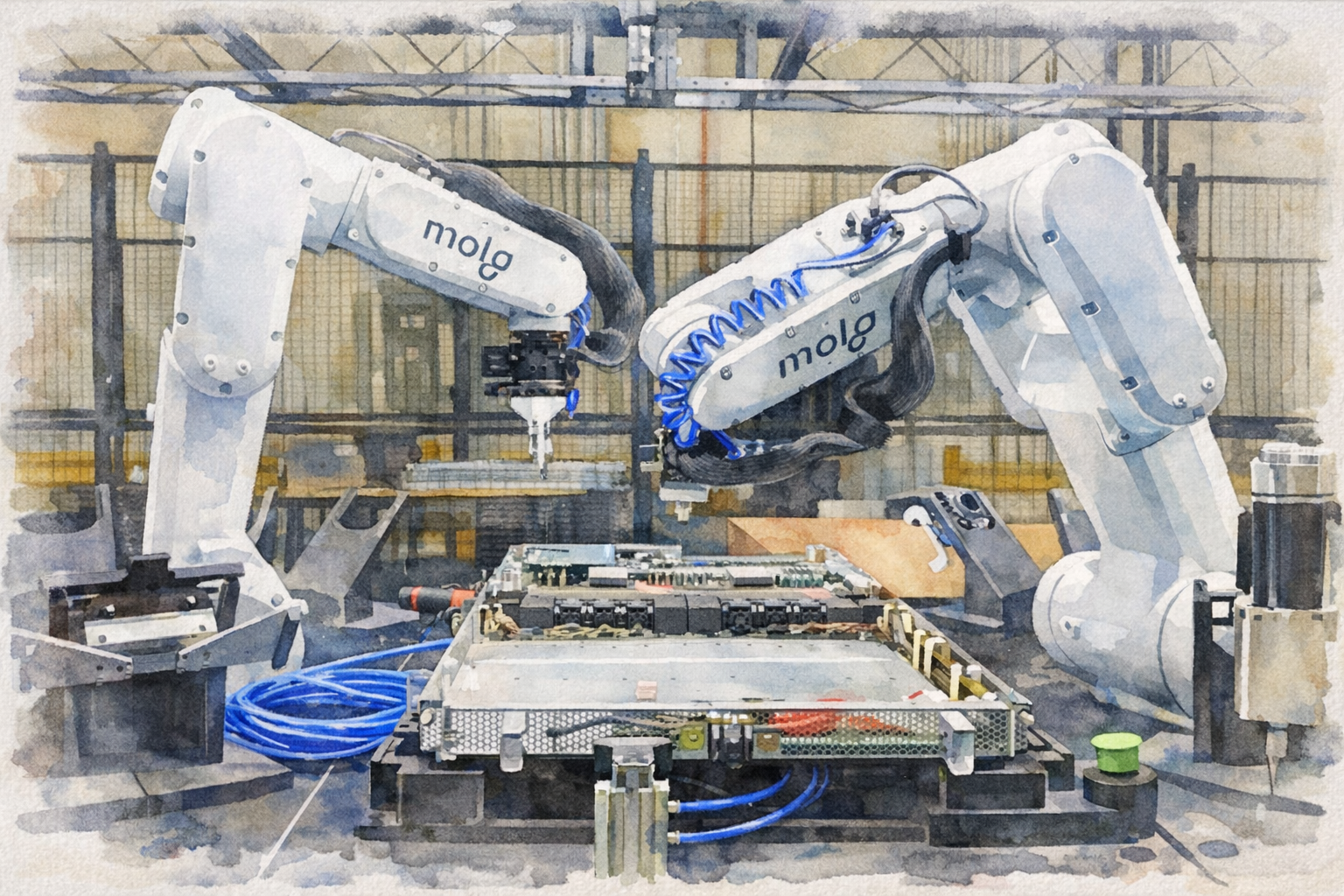
The convergence of AI-driven material identification, robotics automation, and advanced extraction chemistry has created a structural inflection: secondary and alternative material sourcing is becoming supply-critical infrastructure.
Reimagining Recycling with AI and Automation

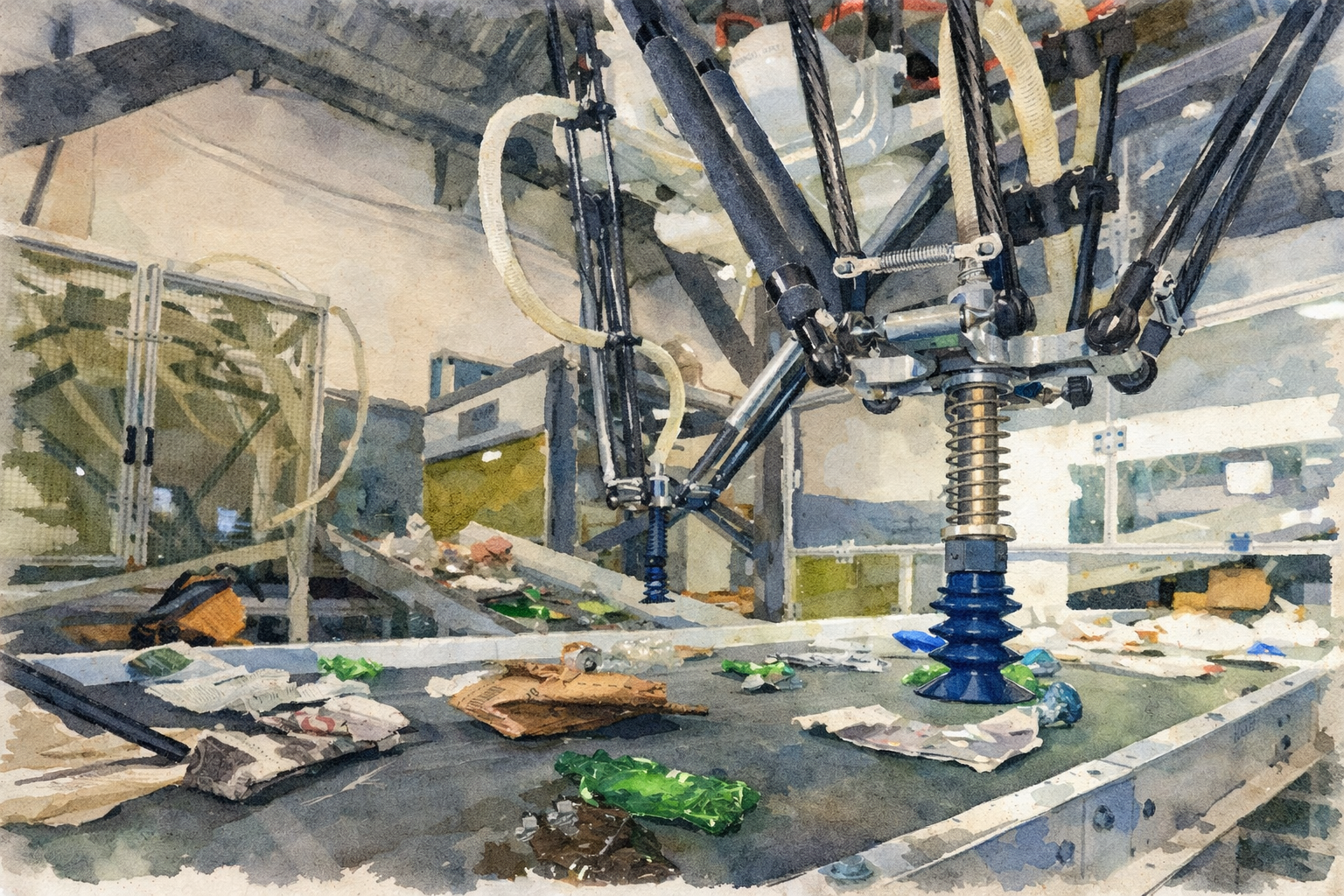
We invest in innovators building next-generation materials and recycling technologies, and in the operating assets that deploy them at scale. This includes backing zero-to-one breakthroughs — advanced sortation, robotics, AI, and processing systems, and investing in one-to-many implementation across infrastructure such as MRFs, processing facilities, and select upstream assets.
By pairing technology ownership with scaled deployment, we create value at both invention and implementation. Integrating advanced systems into incumbent infrastructure lowers costs, improves yield and purity, and enables recovered inputs to compete with virgin supply chains. Operating across both innovation and infrastructure creates a structural advantage, aligning technology insight with disciplined deployment into legacy systems, where disproportionate value accrues.
Three Ways We Win
See Convergence Before the Market Does
We invest where AI-driven demand, reshoring, geopolitics, and regulation converge on physical bottlenecks. When structural forces reinforce each other, risk reprices and new platforms emerge. We position capital before multiples expand and capital crowds in.
Operate Across the Stack
Value accrues at the intersection of infrastructure and technology, so we invest across both. Seeing demand and deployment from both sides sharpens underwriting and speeds conviction. We back platforms that embed in real assets and compound through pull-through economics.
Back Real Margin Expansion
We invest in platforms that lower costs, control chokepoints, or increase throughput in price-inelastic markets. These are cash-generating businesses with measurable margin expansion. We underwrite to unit economics and build durable enterprise value.